Help prevent pressure sores. Stop waking up for turns that already happened.
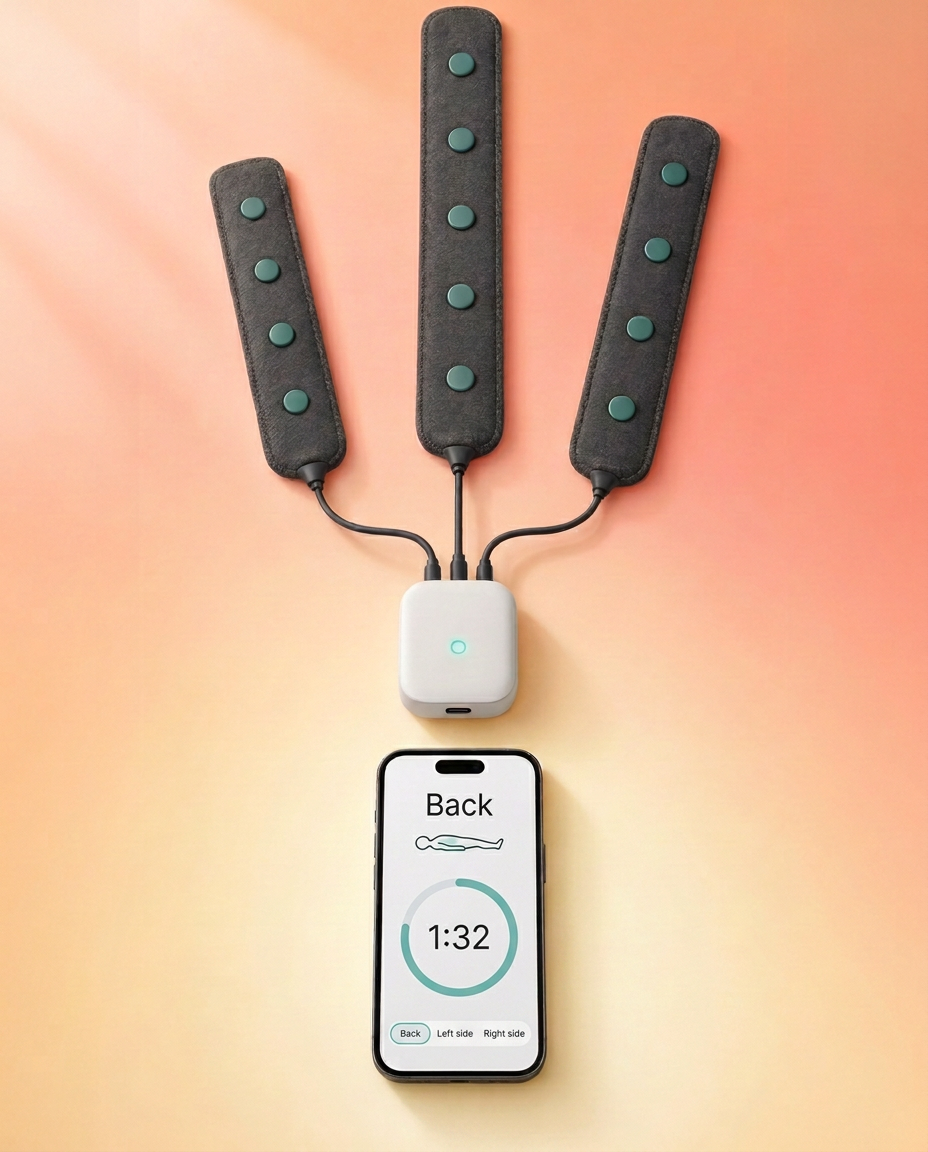
Three thin sensor strips slide under the sheet. They track your parent's position and tell you the moment a turn is actually needed — not a minute before.
Launch price. Regular price $250. No payment today — just your email.
See it in action
Watch TurnEase in a real bedroom.
A 30-second look at the strips, the hub, and the app.
The worry behind every reminder
The hardest part isn't the lifting.
It's the clock. Every two hours, all night, someone has to turn them. Miss one, and the damage starts.
So you set an alarm. And then you lie awake anyway, waiting for it.
Because an alarm doesn't know if they already moved. It just rings.
What's really at stake
First — what exactly is a pressure sore?
A pressure sore (also called a bedsore) is an open wound that starts when skin is pressed in one spot for too long. Here's what every family should know.
Why they happen
When someone lies still for hours, their body weight presses on the skin over bony areas — tailbone, hips, heels, shoulder blades. The pressure cuts off blood flow, and skin and tissue underneath start to break down. In someone who can't shift on their own, a sore can begin in just a few hours.
Who gets them
Anyone who spends long hours in bed and can't reposition themselves: people recovering from illness or surgery, older adults, people living with dementia, Parkinson's, or paralysis. And the person who's usually doing the turning? You.
How common they are
Every year in the US, more than 2.5 million people develop pressure injuries. More than 1 in 10 nursing home residents has had one. At home, where one person carries the care alone, they're an even quieter risk.
The single best protection is repositioning — regularly, before the pressure has time to do damage. That's exactly what TurnEase watches for: it tells you when your parent has been in one position too long, so the turn happens before it's needed.
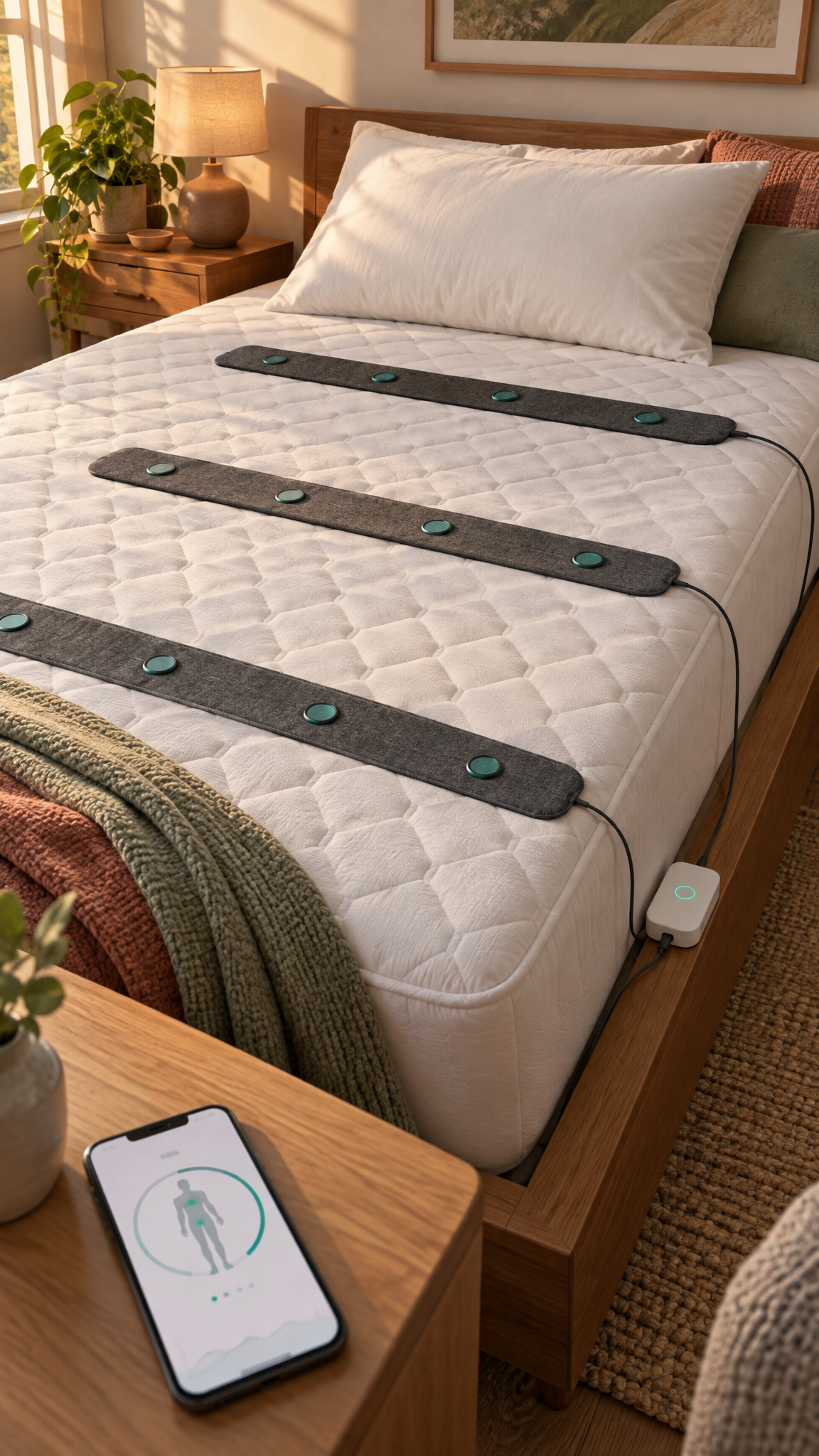
Three thin fabric strips go under the fitted sheet — shoulders, hips, heels. No wiring. No mattress replacement. Works on a normal bed.
2
Plug in the hub.
A small module sits on the nightstand and charges over USB-C. It pairs with your phone over Bluetooth.
3
Open the app.
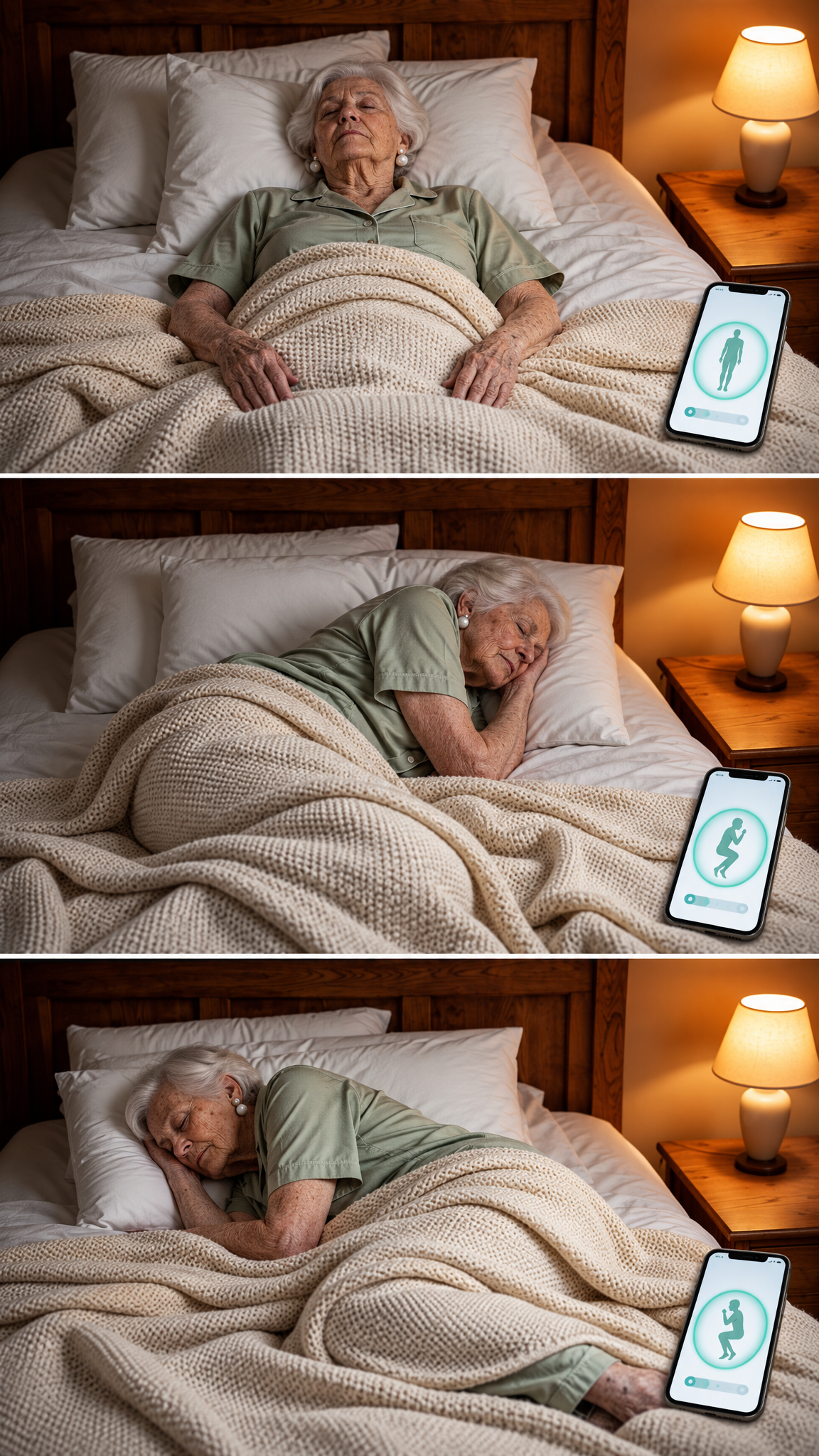
See their position live — back, left side, right side. Set how long is too long. That's it.
The TurnEase difference
The one thing a timer can't do.
Every other reminder counts down from the moment you set it. TurnEase counts from the last time they actually moved.
If they shift on their own, the clock starts over — automatically. You never get woken up for a turn that already happened.
If they don't move, you'll know. Exactly when it matters.
A regular timer
Rings every 2 hours. Even if they already moved.
TurnEase
Counts from their last real position change. Resets itself.
Clear and honest
What TurnEase is not.
It's not a medical device. It doesn't diagnose anything, and it doesn't replace your judgment or your doctor's advice.
It's a monitoring tool. It tells you what you can't see from the next room — and it helps prevent pressure sores by making sure turns don't get missed.
Early reservation pricing
Reserve yours for $149.
$149$250
Regular price $250. Launch price for early reservations. Shipping expected in 3-6 months.
Good to know
Questions, answered.
Does it work on any bed?
Yes. It goes under a normal fitted sheet on a standard mattress. No tools, no wiring, no mattress replacement.
What if my parent moves on their own?
Then the timer resets automatically. You won't be woken up for a turn that already happened. That's the whole point.
Do I need Wi-Fi?
No. The hub connects to your phone over Bluetooth. Wi-Fi is optional.
Is this a medical device?
No. TurnEase is a monitoring tool. It doesn't diagnose or treat anything. It helps you keep track of position changes and helps prevent pressure sores by making sure turns don't get missed.
When does it ship, and what does it cost?
TurnEase is $149 for early reservations — regular price $250. Reserving costs nothing today. We expect to ship in 3-6 months, and we'll email you before that happens.